Mapping the needs of a community

Australian update: Community Insight Australia is working to shape and translate the Community Insight tool for Australia. Please get in touch if you share our vision and would like to take the journey with us.


Policy-makers know that social programmes are more effective if they are provided in the areas of greatest need. But, historically, it has been resource intensive to identify either areas of need or the range of needs of a particular community. This task would either involve weeks of combing through the latest data from all reliable sources or painstakingly interviewing a large enough sample to make assumptions about the populations. As a public servant, I’ve spent hours on the computer painting maps of social disadvantage, a new map for each indicator.

This problem is also faced by Housing Associations and other social housing landlords, who provide homes to over 4.5m households across England, and operate in an environment in which accurate data about communities they work within has become increasingly important to policy and delivery decisions. Their ability to access relevant data has been limited by poor quality data systems and a reliance on a limited pool of research analysts to interpret the data that was available.

In response to this, new housing think-do tank HACT and social policy data experts OCSI recently launched Community Insight, a web-based tool which allows non-expert staff at all levels to explore geographically social indicators of need quickly and easily for the first time, using constantly-updated, reliable data.

I was lucky enough to have Matt Leach, from HACT, take me through Community Insight and I couldn’t have been more impressed. The key to the tool is its simplicity.

  1. You choose the geographic area you are interested in on a map of England and Wales.
  2. The tool will give you the demographic and social indicators of the area.

Screenshot of Community Insight showing a selected area, specific houses by housing type, social indicator categories on the left and colours on the map showing the density of the chosen indicator, mental health issues.

Community Insight area screen grab

Features:

  • the social indicators are also presented in comparison to the national average
  • information about a geographical area can be interacted with online or exported in seconds as a detailed report
  • you can drill down by area or statistical collection for more information
  • the statistical collections behind the tool are automatically updated as their sources are updated
  • geographical areas can be defined specifically by a spreadsheet of housing stock or drawn with your finger or a mouse onto a map as a suburb, county or region.

Some of the ways housing providers are using Community Insight could transfer to policy makers and programme designers:

  • comparing between different areas in order to target community investment programmes to areas of greatest ‘need’
  • assessing change over time in different areas, as a starting point for evaluation of programme impact
  • combining with more detailed data from administrative data sets, to develop ‘at-risk models’ to identify areas and properties (and indeed individuals) that might be at risk e.g. of rent arrears

The tool is notable for a number of reasons:

  • it is one of the first large scale commercial approaches to accessing and interpreting open data launched by a UK-based social enterprise in a major public service area
  • it was designed from the bottom up as a tool for practitioners (one of the design principles that drove the team was “democratising data”)
  • it has had instant, mainstream success, with over 60 landlords with a total stock in management of nearly 1m households subscribing to the service within 4 months of its launch
  • it’s incredibly easy to use and the data produced is fit for purpose.

Easy to use

The tool was developed with its users involved at every step of the way. Rather than start with the data sets and try to make them interactive, the development of Community Insight was driven by the needs and intentions of the user. The intended users are housing providers – they can upload their housing stock and ascertain the social characteristics of the people they house. However, even a quick play with the tool suggests that a much wider range of unintended users – policy-makers and programme designers across government and other public service areas – might be beneficiaries. A number of local authorities, for example, facing significant cuts to their in house capacity to collect and analyse data have expressed interest in embedding Community Insight in order to retain the ability to access information on the communities they work within.

Business model

Community Insight is sold on a subscription basis, with subscribing organisations having unlimited staff access to the tool across their business. They are able quickly to produce comparable reports on different geographical areas as the need arises. OCSI and HACT ensure the data is constantly updated and will continue to develop and improve the resource over time. Subscribers report an immediate reduction in the costs of community profiling consultancies (for some housing associations paying back the annual subscription in a matter of weeks), little to no installation or maintenance overhead (as all data is updated centrally) and minimal training requirements for new users.

Selection of headline indicators from the  Community Insight Report on Emmaville (a fictitious village).
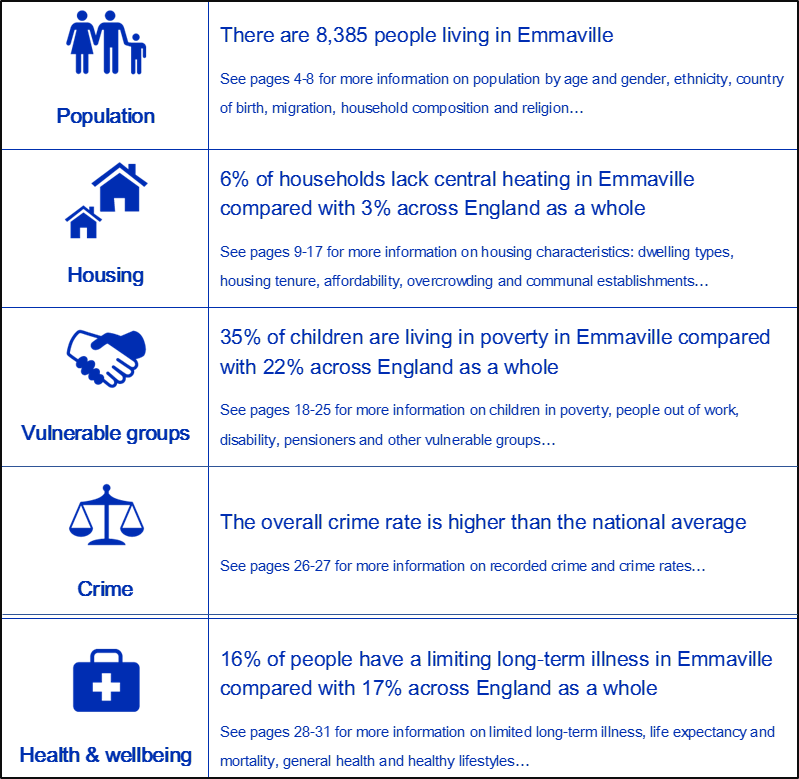
Emmaville overview

 Statistics for each selected geographical area

  • population by number, age, gender, dependency ratio, population size over the last 10 years, ethnicity and country of birth, migration statistics, household composition, religion
  • number of types of houses e.g. flats by local median price of each, renting and ownership proportions, trends in house price over the last 6 years, central heating, overcrowding and dwelling size, local communal residential establishments
  • vulnerable groups by types of benefits claimed and number of claimants
  • crime by type recorded and 10 year trend
  • health by life expectancy and long-term illnesses, healthy eating, smoking and binge drinking
  • education by qualifications, pupil scores at key stage tests
  • economy by income, employment status and sector, job vacancies, local businesses, index of multiple deprivation, child wellbeing index
  • transport by car ownership, distance to key services
  • community by classification of type, feeling of neighbourhood satisfaction, active charities, air pollution

Potential uses

Following their roll-out in the housing sector, HACT and OCSI are considering where Community Insight might be applicable or adaptable to other sectors.  After my brief trial of the tool, my immediate thoughts for additional applications by potential non-housing provider users are:

  • designers of social impact bonds and other payment by results programmes might use the Community Insight tool to select an intervention cohort of appropriate size and need
  • researchers might use the tool to scan areas where they might focus their on-the-ground investigations
  • journalists might use the tool to describe the community a particular event has taken place in
  • local authorities might use the tool to educate their staff about the diversity and differences within their communities
  • social investors interested in place-based investing

What might you use it for?
Fewer criminals or less crime? Frequency v binary measures in criminal justice

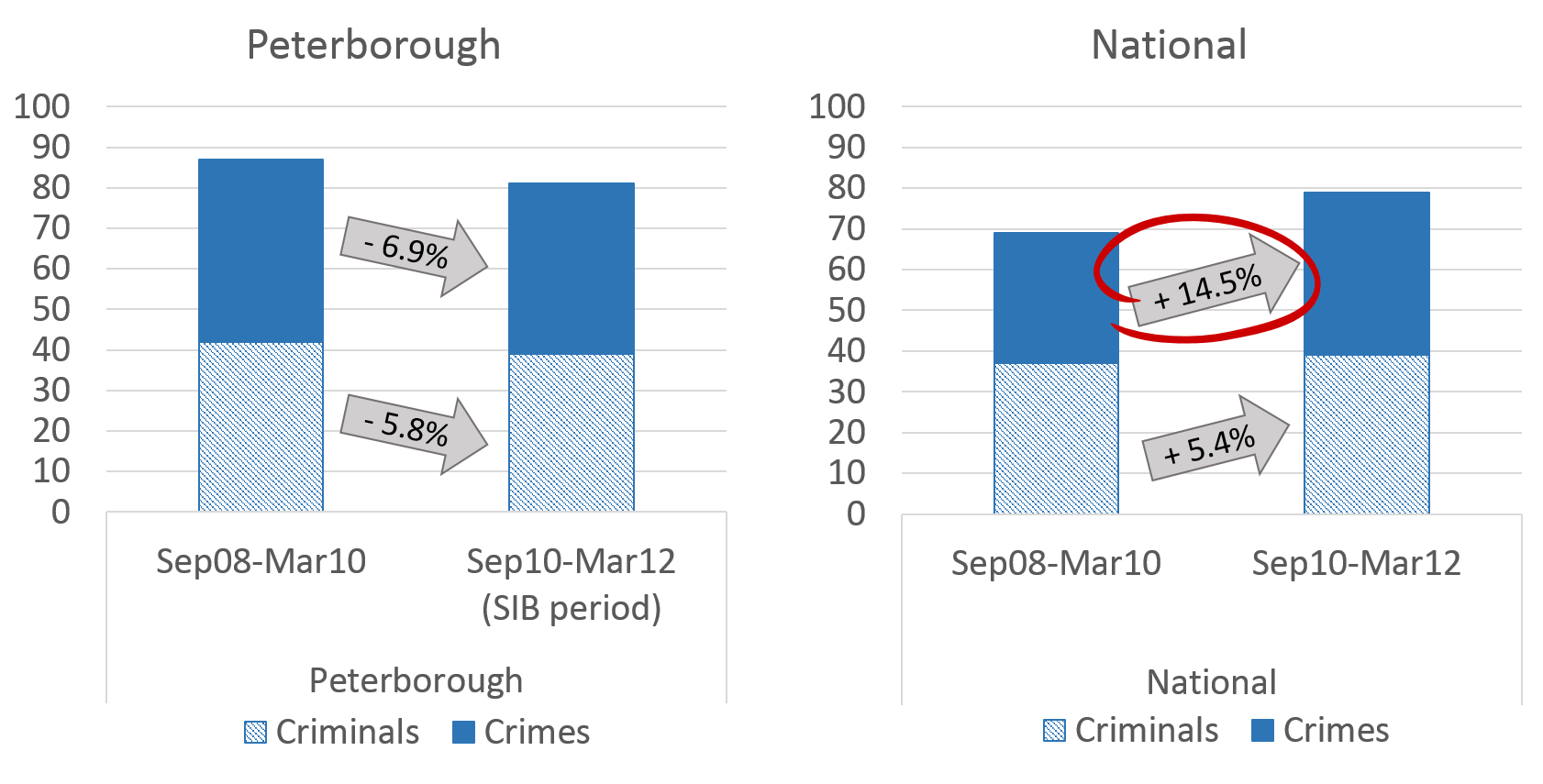
The June 2013 interim results released by the Ministry of Justice gave us a chance to examine the relationship between the number of criminals and the number of crimes they commit. The number of criminals is referred to as a binary measure, since offenders can be in only one of two categories: those who reoffend and those who don’t. The number of crimes is referred to as a frequency measure, as it focuses on how many crimes a reoffender commits.

The payments for the Peterborough SIB are based on the frequency measure. Please note that the interim results are not calculated in precisely the same way as the payments for the SIB will be made. [update: the results from the first cohort of the Peterborough SIB were released in August 2014 showing a reduction in offending of 8.4% compared to the matched national comparison group.]

In the period the Peterborough SIB delivered services to the first cohort (9 Sept 2010-1July 2012), the proportion of crimes committed over the six months following each prisoner’s release reduced by 6.9% and the proportion of criminals by 5.8%. In the same period, there was a national increase in continuing criminals of 5.4%, but an even larger increase of 14.5% in the number of crimes they commit. The current burning issue is not that there are more reoffenders, it is that those who reoffend are reoffending more frequently.

Criminals or crime 1Criminals (binary measure) in this instance are defined as the “Proportion of offenders who commit one or more proven reoffences”. A proven reoffence means “proven by conviction at court or a caution either in those 12 months or in a further 6 months”, rather than simply being arrested or charged.

Crime (frequency measure) in this instance is defined as “Any re-conviction event (sentencing occasion) relating to offences committed in the 12 months following release from prison, and resulting in conviction at court either in those 12 months or in a further 6 months (Note: excludes cautions).”

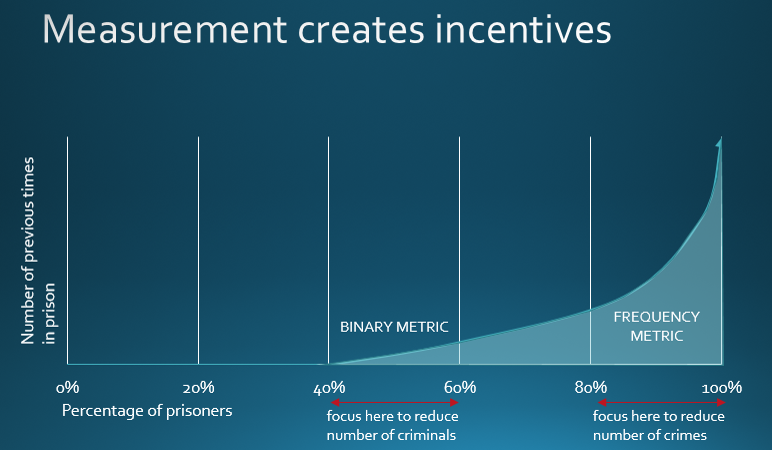
The two measures are related – you would generally expect more criminals to commit more crimes. But the way reoffending results are measured creates incentives for service providers. If our purpose is to reduce crime and really help those who impose the greatest costs on our society and justice system, we would choose a frequency measure of the number of crimes. If our purpose is to help those who might commit one or two more crimes to abstain from committing any at all, then we would choose a binary measure.Criminals or crime 2Source of data: NSW Bureau of Crime Statistics and Research

The effect of the binary measure in practice: Doncaster Prison

A Payment by Results (PbR) pilot was launched in October 2011 at Doncaster Prison to test the impact of a PbR model on reducing reconvictions. The pilot is being delivered by Serco and Catch22 (‘the Alliance’). The impact of the pilot is being assessed using a binary outcome measure, which is the proportion of prison leavers who are convicted of one or more offences in the 12 months following their release. The Alliance chose to withdraw community support for offenders who are reconvicted within the 12 month period post-release as they feel that this does not represent the best use of their resources. Some delivery staff reported frustration that support is withdrawn, undermining the interventions previously undertaken. (Ministry of Justice, Process Evaluation of the HMP Doncaster Payment by Results Pilot: Phase 2 findings.)

I have heard politicians and policy makers argue that the public are more interested in reducing or ‘fixing’ criminals than helping them offend less, and thus the success of our programmes needs to be based on a binary measure. I don’t think it’s that hard to make a case for reducing crime. People can relate to a reduction in aggravated burglaries. Let’s get intentional with the measures we use.

What do the Peterborough SIB interim results tell us?

Update: actual results are now out.

First cohort results from the Peterborough SIB were released August 7 2014. The Social Finance UK press release on the results has lots of great information, with a quote below.

“Results for the first group (cohort) of 1000 prisoners on the Peterborough Social Bond (SIB) were announced today, demonstrating an 8.4% reduction in reconviction events relative to the comparable national baseline. The project is on course to receive outcome payments in 2016. Based on the trend in performance demonstrated in the first cohort, investors can look forward to a positive return, including the return of capital, on the funds they have invested.”

Outdated information below:

Peterborough Interim ResultsOn the 13th of June, the Ministry of Justice released interim results from the Peterborough Pilot SIB. The results were seen as very encouraging, although Social Finance stressed that the results “do not measure  reoffending behaviour over as long a period as the Social Impact Bond will be judged and are not compiled on precisely the same basis as will be used by the Independent Assessor during the course of 2014 to determine whether a payment is due.”

What the results do tell us

The results tell us that the reoffending events have improved in the Peterborough cohort as the national average has worsened. We can be fairly confident that the reduction in reoffending is due to the Peterborough SIB, or more specifically the One Service. This in itself is quite an achievement for Government policy.

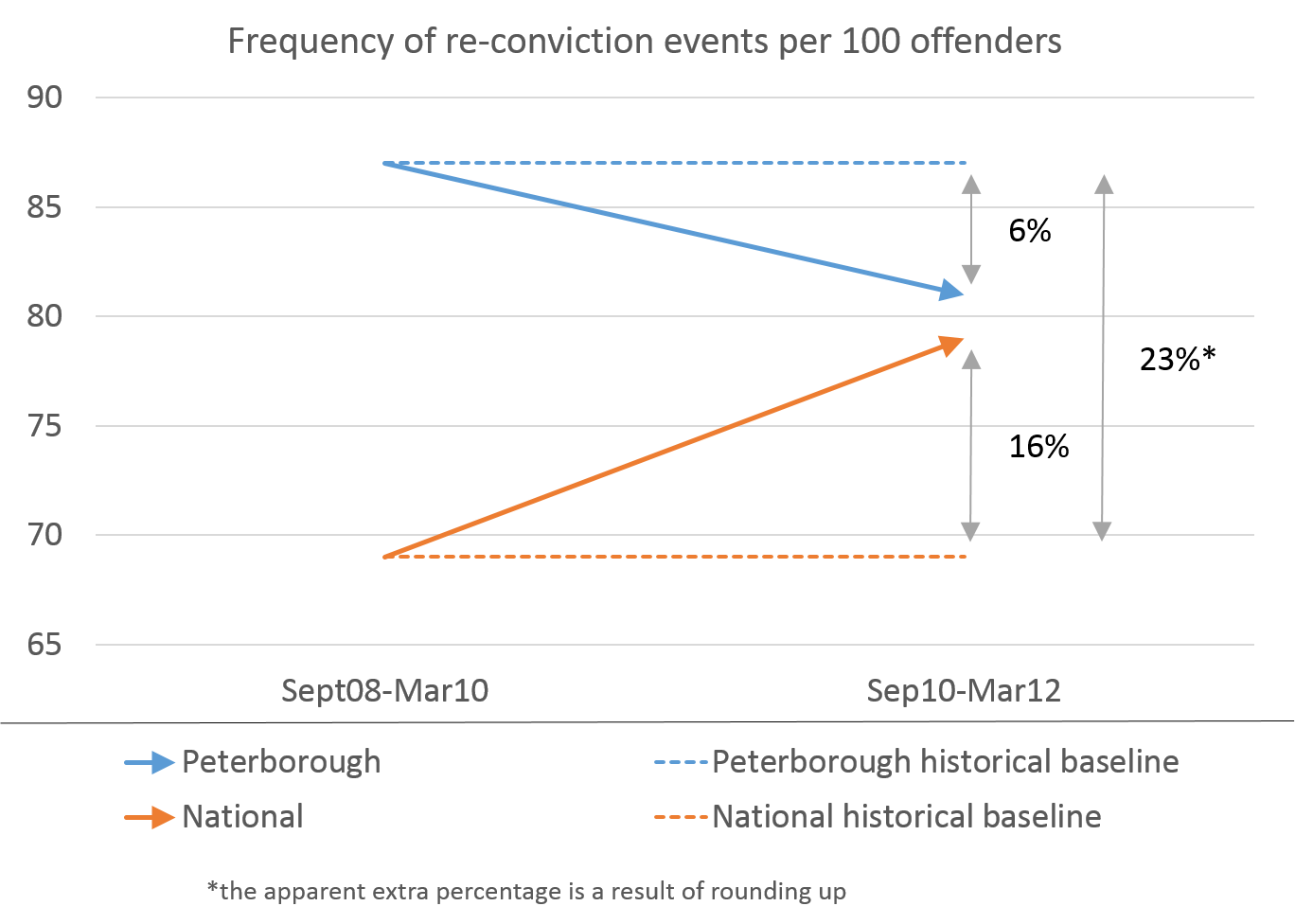
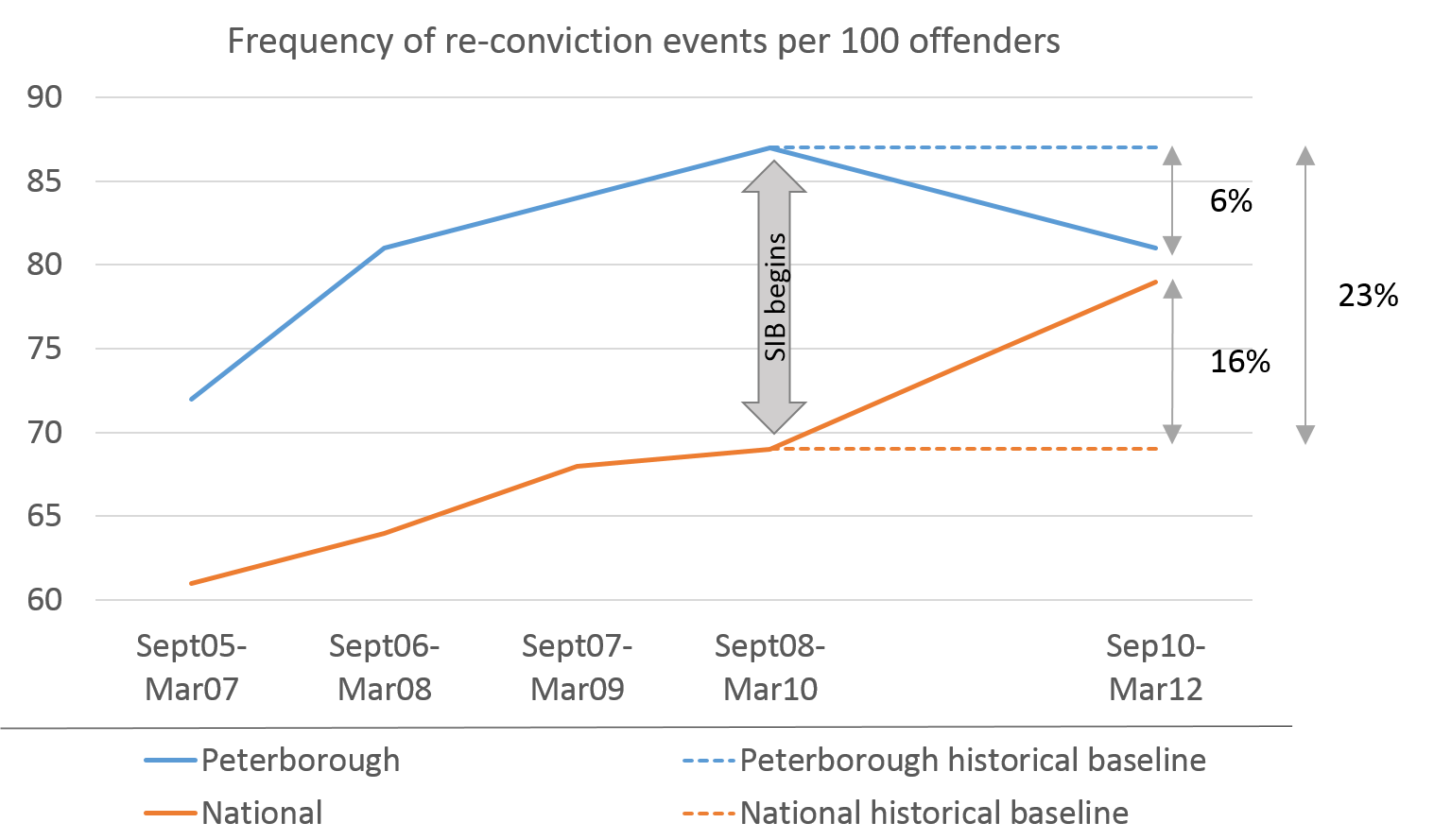
These results are also an excellent demonstration of the need to have a contemporary comparison, in this case the Police National Computer control group, rather than a historical baseline. If the historical re-conviction rates at Peterborough had been used as the only comparison, it would appear that a 6% reduction had been produced. Using the national comparison group shows that the programme also counters an increasing trend in re-convictions to produce a relative reduction of 23%. The inability of historical baselines to represent the fluctuating environment affecting reoffending is further illustrated when we look at results leading up to the 2010 launch of the One Service. The graph below shows that reoffending by both Peterborough inmates and prisoners across the nation was increasing until SIB services began in 2010, but then reversed in comparison to the national rates.

Peterborough Interim Results 2

What the results don’t tell us

The results do not tease out for us which aspects of the One Service might be more or less responsible for success. So, the results do not tell us if the reduction in reoffending is due to the:

  • use of volunteer mentors
  • voluntary, rather than mandatory, participation
  • long-term nature of the SIB funding
  • flexibility of funding
  • ability to innovate programme delivery to optimise outcomes
  • focus on a single outcome
  • extraordinary skills of the people involved in managing and delivering services
  • continuous evaluation and improvement of the One Service
  • discipline of reporting to external investors
  • alignment of financial and social returns.

The April 2014 evaluation commissioned by the Ministry of Justice from Rand Europe sheds some light on the perceived benefits of the SIB model, including the way the flexibility of funding allows for the service to improve in response to performance management data.

Update April 2014

See 24 April results and press release from the Ministry of Justice stating “Before the pilot, for every 100 prisoners released from Peterborough there were 159 reconviction events annually. Under the scheme this figure has fallen to 141 — a fall of 11 per cent. Nationally that figure has risen by 10 per cent over the same period.”

Toby Eccles blog analyses how well the Peterborough SIB achieved its objectives to:

  • Enable innovation
  • Enable flexibility and focus on outcomes
  • Bring rigour to prevention
  • Better alignment
  • Investment in social change.

And a good analysis of the Peterborough journey and what was learnt is given by the Social Spider here. I have a slightly broader view of SIBs in the context of policy reform, but I like the discussion.

References

Ministry of Justice, Statistical Notice: Interim re-conviction figures for the Peterborough and Doncaster Payment by Results pilots12 June 2013.

Social Finance, Interim Re-Conviction Figures for Peterborough Social Impact Bond Pilot, press release 13 June 2013.

Ministry of Justice, Mentoring Scheme Reduces Reoffending, press release 13 June 2013.

Vibeka Mair, Peterborough social impact bond has slashed reoffending rates says MoJ, Civil Society Finance, 13 June 2013.

Alan Travis, Pilot schemes to cut reoffending show mixed results, The Guardian, 13 June 2013.

BBC, Prison payment-by-results schemes see reoffending cut, 13 June 2013.

Nicholls, A. & Tomkinson,E. Case Study – The Peterborough Pilot Social Impact Bond – Oct 2013, Oct 2013.

A second social impact bond for NSW Australia

Benevolent Society Social Benefit Bond(Source: The Benevolent Society. “First Charity” refers to the Benevolent Society being the first charity established in Australia.)

On June 14 2013 it was announced that the terms of a second social benefit bond have been agreed in New South Wales, Australia. It will provide services to strengthen 400 families and reduce the need for out-of-home care over five years, beginning October 2013. Press releases were issued by the charity service provider, The Benevolent Society and one of their partners in the SIB, Westpac Institutional Bank. The other partner was a second bank, the Commonwealth Bank of Australia and the involvement in this deal of two of the four large Australian banks has captured media attention. The banks were involved in the construction of the bond as pro bono advisors and are also investors. The Benevolent Society is also investing in the Social Benefit Bond, a move promote confidence in their ability to deliver outcomes. Other investors include institutional investors NRMA Motoring & Services and Australian Ethical Investments.

Investors will provide working capital for the services up-front and the NSW Government will cover all repayments once outcomes have been produced and measured. The social benefit bond also involves financial services firm Perpetual as trustee, a move expected to give investors further confidence in the deal. The role of the intermediary as played by Social Finance in Peterborough and MDRC in New York is not played by any organisation in this arrangement in a comparable way. 

Benevolent Society SBB tiers

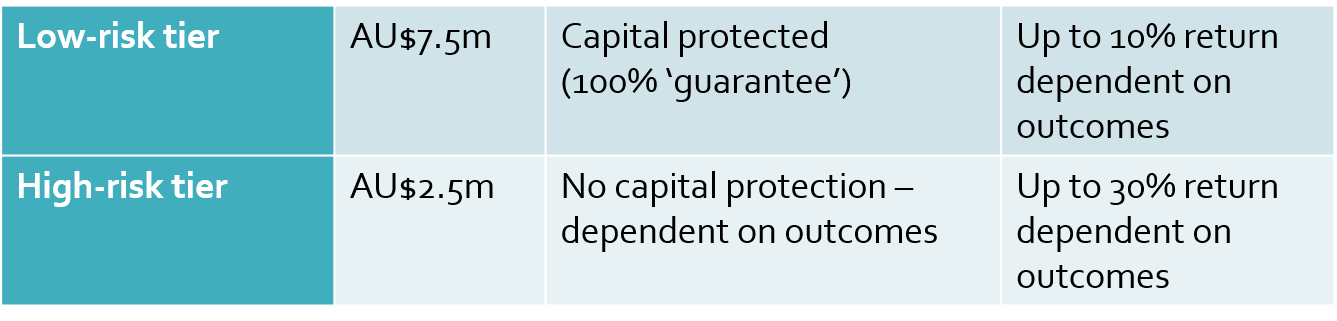
The offering closed on Friday October 4th having raised $10m. 40 investors make up the low-risk tier and 17 investors make up the high-risk tier. In contrast to expectations that social impact bond risk needs to be reduced to attract investors, the high-risk tier proved more attractive and sold out much faster.

Once again, we see the NSW Government offering a guarantee, which means that the Government will pay even if the service does not produce the desired outcomes for recipients. In the previous NSW social benefit bond this guarantee was for between 50% and 75% of investor capital. This time it’s 100% of investor capital guaranteed, but only for the low-risk tier of investments, worth $7.5m or 75% of total investment. This may be an investment by the Government in establishing a market and track record for social impact bonds, rather than a model we can expect to see replicated in future years. The $7.5m of the bond with protected capital will also accrue variable returns up to 10%, dependent on outcomes. An additional $2.5m high-risk tier of investment will involve capital at risk, but will offer outcome-dependent returns up to 30%.

Media Coverage

Date Author Publisher Title
14/06/2013 Benevolent Society First charity issues Social Benefit Bond with Westpac and CBA
14/06/2013 Bela Moore Super Review Westpac Institutional and Commonwealth team up to launch social benefit bond
14/06/2013 James Fernyhough Financial Standard Big banks move into SBB space
14/06/2013 Australian Financial Review NSW strikes deal for $10m social bond
14/06/2013 Westpac First of its kind Social Benefit Bond supports efforts to keep families together – paves the way for socially responsible investors
15/06/2013 Clancy Yeates The Age / Brisbane Times Lenders back bond to keep children out of foster care
18/06/2013 Pro Bono Charity Issues Bank-Backed Social Benefit Bond
19/06/2013 Rick Morton The Australian Banks pitch in for $10m bond
4/10/2013 Rachel Alembakis The Sustainability Report Westpac, CBA raise $10 million for Benevolent Society SBB
5/10/2013 Sally Rose The Australian Financial Review NRMA and Australian Ethical buy Benevolent Society bond

This is the second of three social benefit bonds that are the product of a request for proposal issued by the NSW Government in September 2011 and awarded March 2012. The first was the Newpin social benefit bond announced in March and the final bond to reduce adult reoffending is still under development by the Government and Mission Australia, a charity service provider.

(Updated 8 October 2013.)

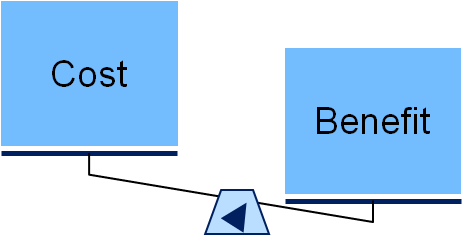
Making the economic case to government

CBA

Public agencies commissioning social impact bonds or other payment by results programmes want to see some kind of cost benefit analysis. But they might not always be so willing to provide the information an external organisation needs accurately estimate the benefit side. Different commissioners also have different requirements for cashable savings – for some it’s a key driver and for others it’s not a consideration.

I suggest that collecting benefits into the following five categories makes the information for the commissioner much clearer and, for UK commissioners, also explicitly addresses the requirements of the Social Value Act. All estimated amounts should be itemised and if an external applicant is unsure of the savings or benefits to public service agencies, then they should present a best estimate that prompts the commissioner to provide a more accurate figure. The Global Value Exchange is a database of proxy values that will be helpful for this.

Estimated amount
Cashable savings to commissioner(s)
Cashable savings to other public agencies
Non-cashable benefits / efficiency savings to commissioner(s)
Non-cashable benefits / efficiency savings to other public agencies
Savings/benefit to other stakeholders (social value)
Total economic benefit  

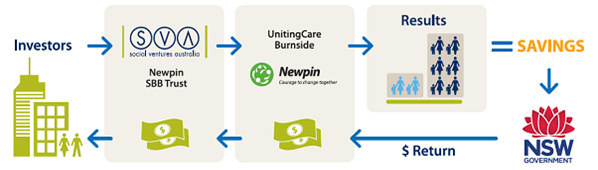
NSW Newpin social benefit bond – returns to investors

Image

(Social Ventures Australia: Newpin Social Benefit Bond)

The NSW social benefit bond (social impact bond) for UnitingCare Burnside’s Newpin programme is attracting interest from a range of investors, including NGS Super – the first time we’ve seen a pension/superannuation fund sign up to a social impact bond. The Newpin programme is for families with children aged 0-5 and results are measured on the proportion of children in out-of-home care (which includes foster care, institutional care and placement with extended family) that are returned to their families by the courts. This is called the restoration rate.

Eureka Report’s A high-yield bond with social benefits recently revealed the social and financial returns over the seven year social benefit bond as follows:

Restoration rate (r) Return to investor (IRR)
≥ 70% 15%
65% ≤ r < 70% 12%
60% ≤ r < 65% 7.5%
55% ≤ r < 60% 3%
<55%
•minimum 5% yield over first three years
•no minimum yield after three years
•75% of capital returned if bond redeemed at four years
•50% capital returned if redeemed after four years

The Newpin restoration rates were 74.5% last year. Their approach to this social benefit bond, to measure their results for a similar cohort for the year prior to the bond, gives social investors information with which to judge the social and financial risk of the investors. Providing this information attracts investors beyond the die-hard philanthropists who have backed the programme from the start.

Funds were raised from 59 investors by Social Ventures Australia (SVA) with a minimum investment of AU$50,000. The SIB was oversubscribed. Below is a breakdown of investment by investor categories as presented by Ian Learmonth, Executive Director, Social Ventures Australia at the 2013 Social Finance Forum in Sydney/Australia.

NewPin SIB investors

Did you get what you came for? Realising social impact bond objectives

shopping basketIn a previous blog, Do SIBs Work?, I listed 22 objectives that have been given for pursuing SIBs as they have been announced around the world. Now I want to examine the achievability (is that even a word) of each one. Some objectives are achieved just by signing the contract to deliver a SIB, but some objectives rest on longer-term outcomes and these are the more interesting. But the conditions of achieving outcomes need to be built into SIBs from the start. If we’re after transparency, then we need to publish terms and results. If we want to shift funding to prevention, there must be a plan to continue funding the SIB preventative service after the SIB is over.

Better programs and better results for the people who participate in them
1. Improving results for beneficiaries by focusing on outcomes rather than outputs

I’d say this is the objective most likely to be achieved. Peterborough doesn’t have its results in, but word on the ground is that providers feel the focus on outcomes has made them deliver better services and participants enjoy the holistic and seamless approach. This may be an objective more easily achieved where payments are based on a single outcome, like Peterborough or Essex, than multiple outcomes like the DWP Innovation Pilots.

2. Improve the likelihood of delivering real and sustainable solutions to important social challenges

For this to happen you need a funding to be sustained – there hasn’t been a whole lot of talk so far of what happens after the SIB, but if the solutions are to be sustained, they’re going to need some continuity of funding. I think the services we’re seeing are real solutions, but we can’t think that solving a problem means it goes away. Solving social problems mean they go away for some of the people for some or all of the time – bettering a situation is noble – thinking you’re going to eradicate is is naive.

3. Making effective interventions available to far more people in need than the number that can be reached through traditional state contracts and philanthropy

This will be achieved as long as SIBs are delivering additional services to those who would otherwise have received little to nothing.

4. Harnessing the innovation capacity of both investors and service providers for publicly funded services

We’re unlikely to get any innovation if the same providers are delivering the same proven programmes – the objective will be achieved if there is room to improve and real changes are made on the ground. Peterborough is certainly delivering on this- not in any of the components of service for participants, but in the consistent and collaborative way they are delivered, so that the impact on their lives is real and sustained.

5. Adding discipline to measuring outcomes for government programs because there is an upfront agreement on how to measure success

This depends how much discipline you had about measuring outcomes before and how much political will there is to improve measurement in government – this may be more applicable to an Australian context where increased use of evidence-based policy is very much on the agenda – Peterborough has certainly introduced a measurement system that was then used in a number of other pilots, but it looks like the new Ministry of Justice probation reforms will revert to the less informative binary measure as it’s perceived as more favourable to Ministers and the public.

6. Improving the evidence base for social services, by mandating measurement and publication of outcomes

Only achieved if the results of the SIB are published along with full evaluations of the programmes that achieved them, ideally including follow-up measurement after the SIB is over. 

7. Accelerating the adoption and implementation of promising programs

Dependent on the programme chosen – was it promising? In all SIBs so far I would say yes.

8. Accelerating the expansion of evidence-based programs delivered by effective nonprofits

This is very much the objective that seems to have been focussed on in the US. You’d have to look at the expansion of programmes like Multi-Systemic Therapy (Essex SIB) and Moral Reconation Therapy (New York SIB) to see how the inclusion of the programmes in these SIBs impacted their expansion rates.

A social finance market
9. Unlocking funds to tackle social issues

We’ve certainly seen new funds committed by Government, and the involvement of an investor like Goldman Sachs suggests new funds (unless it comes from their corporate social responsibility budget).

10. Growing the social finance and social business sector

SIBs have certainly grown interest in the social finance sector and have become a bit of a poster-child. This has occurred at the same time as rapid growth in the social finance and social business sector, so I think it’s fair to assume an element of causal relationship.

11. Providing new financial instruments to harness private investment for the benefit of the community

This is achieved the minute the contract is signed. But in all honesty, if investors don’t receive their capital back, there won’t be any more and the instrument will no longer be viable.

12. Enabling investors to achieve financial returns and social impact

SIBs will either achieve both financial returns and social impact or neither, so this objective is pretty achievable. Some might argue that the measurement of impact is a little on the weak side for some SIBs, but if the measurement system is assumed to be a good indicator of social impact, then this is highly achievable.

Government
13. Increasing funding for prevention and early intervention programs in a sustainable manner

This objective will only be achieved if funding is sustained, but we should all be asking the question of commissioners “What happens when your SIB is finished?”

14. Improving accountability and transparency for publicly funded services

Depends on publication of terms and results – some current SIBs are achieving this better than others – if it’s an objective stated at the start, the public should expect and demand publication of information

15. Allowing governments to accept and measure new ideas from external providers, only paying for the ones that deliver

This is difficult and unlikely to be achieved in the current market. Government’s ability to accept new ideas from the market is often limited by procurement rules, but the DWP innovation SIBs certainly allow 10 new ideas to be tested and compared. Only paying for the ones that deliver? This occurs in the UK, but not so much in Australia where investors stand to receive between 50% and 75% of their funds if services deliver no results at all.

16. Saving Government money

There is no doubt that there is a multitude of benefits to government from being involved in a SIB, but money in the hand is one of the least achievable, unless the services that will experience reduced demand are spot-purchased (i.e. purchased as units of service in direct response to demand). Steve Goldberg defines this as an accounting problem, rather than a savings problem, but governments are constrained within their accounting systems and are thus unlikely to cut anyone’s budget to pay for a SIB. The only SIB we’ve seen where savings resulting from a SIB intervention are used to repay investors is the Essex SIB , although these savings will not cover the cost of the SIB.

17. Lowering risk for government

Financial risk may be lower, but due to media attention, the reputational risk of programme failure is extraordinarily high. As a result, the due diligence undertaken by governments mitigates most of the risks of SIBs before they enter.

18. Savings can be recaptured and reinvested into a permanent funding stream for the program

Highly unlikely – see ‘Saving Government money’ above.

Service providers
19. Increasing accessibility of payment by results contracts

This is a UK objective – in the US many not-for-profits are on these kinds of contracts and in Australia there is a dominance of not-for-profits delivering government contracts for social services, despite there being few payment by results contracts. In the UK, it seems that this objective has been achieved for the SIBs introduced, but the test of whether it opens up broader payment by results contracts will be the upcoming rehabilitation reforms.

20. Giving nonprofit providers a committed, long-term funding stream not subject to budget cuts

This is achieved when contracts are signed and seems a significant contribution of SIBs for providers.

Collaboration
21. Aligning the interests of beneficiaries, nonprofit service providers, private investors, and governments

The SIB contract development process certainly achieves this. The only risk is that some voices around the table are louder than others and some interests are therefore maligned, but that consideration would hold over the development of any contracting arrangement.

22. Facilitated coordination with organisations working on overlapping problems

We’ve seen this demonstrated very well in Peterborough, but it will depend on the delivery structure. In New South Wales, Australia, the government has contracted for results directly with UnitingCare Burnside, a service provider, so they are not mandated to work with other delivery organisations.

A world of SIBs (social impact bonds)

In the tropicsworld
I was a bit late picking up this post in the Stanford Social Innovation Review by Michael Belinsky & Sebastian Chaskel last November, Designing a Social Impact Bond in the Tropics. They are working with the government of the state of Antioquia in Colombia and could bring us the first SIB from Latin America. They highlight the following:

  1. The ups and downs of legal innovation – the differences in regulatory environments that SIBs are being implemented in
  2. Savings are unlikely to significantly offset the cost of the program – this is becoming more widely accepted now. The concept of savings from prevention flowing back into a system that can pay for itself makes sense in abstract, but it’s more likely governments will be interested in purchasing better outcomes than reconfiguring their accounting systems to pick up ‘savings’
  3. Significant opportunity for development agencies – something we’re hearing more of and certainly development has a stronger history of innovative financial mechanisms than public services – in fact the SIB idea was seeded by Arthur Wood’s work in finance mechanisms for sanitation programmes
  4. Opportunity to shake up service providers – this is much more attractive in some places than others – the article talks about transferring responsibility to intermediaries, but some governments are considering a SIB as a way to reinvigorate and challenge their long-term providers to keen innovating
  5. The necessity of multitasking – this is about the multitude of skills needed to develop a SIB. The legal, statistical, financial and operational demands of developing these arrangements are immense, but I think that’s why everyone gets so excited about SIBs – they’re really challenging to work on and demand the building of capacity from all those involved.

In Mozambique

Interesting article Social impact bonds gear up for Mozambique from Dave Mayers recently. The most interesting variant of this idea is the use of a non-government commissioner, mining companies, to pay for improvements in malaria rates. The argument is that the benefit to their workforce from effective malaria programmes justifies the investment – keep watching!

In South Korea

Park Ki-yong writes about a “social impact bond-inspired incentive” programme of Public-private sector partnership to prevent suicide in over 65-yr-olds. The programme doesn’t fit with my definition of a social impact bond because it doesn’t have external investors, so I’d just call it a performance-based contract. It’s interesting because:

  • it uses competition between providers as a measure of results,
  • it has a 10% bonus or 5% penalty based on results – not a whole lot, but certainly a logical way to drive performance
  • the justification for not involving external investors was the inability of government to guarantee payments – I’m not sure what this means exactly, but it would be interesting to hear the expanded story about this.

Something old or something new?

The social investment market is characterised by new organisations, new programmes, new models of financing, and new cohorts of service users. There is great value in demonstrating the social return of something new, but the risks associated are inherently greater. Investors may therefore require a higher financial return. Investors in innovation often receive valuable media attention, as new programmes are more newsworthy.

Some social programmes have been robustly evaluated as to their effect. These evaluations can cover applications of the programme in different places and to different intervention groups. The culture of developing, defining and trade-marking a social programme such that it has training and resources and can be delivered across contexts is more apparent in the US. With these types of programmes, investors are likely to perceive less risk, as they have data relating to previous effect sizes and the proportion of programmes that achieved them. They also have the organisation that developed the programme providing training, resources and support to the service providers.

The words ‘evidence’ and ‘innovation’ are both commonly used by all parties when justifying involvement in a social impact bond (SIB). In all SIBs, there is likely to be innovation around the partnerships that are formed, the way services are delivered and the people services are delivered to, and the basis on which Government pays – outcomes, There is also likely to be more evidence gathered about the outcomes of a programme than has previously been collected or made publicly available. SIBs are paid for on an outcomes basis, which means that service delivery organisations are free as to how services are delivered. But this is not always the case.

The Peterborough SIB collects performance management data and uses this to improve its services as the SIB progresses. Contracts are renegotiated with service providers annually and changed to better deliver the outcome of reduced reoffending. The NY City SIB for young offenders on Rikers Island is developing a new programme, but its primary component is Moral Reconation Therapy, a model of Cognitive Behavioural Therapy, that has been well researched and has an evidence base. The Essex SIB will deliver Multi-Systemic Therapy and Manchester City Council is looking to provide Multi-dimensional Treatment Foster Care. These programmes also have an evidence base.

So can you have a greater impact if your SIB delivers a programme that is already well-evidenced or can you have a greater impact if your SIB delivers something completely new?

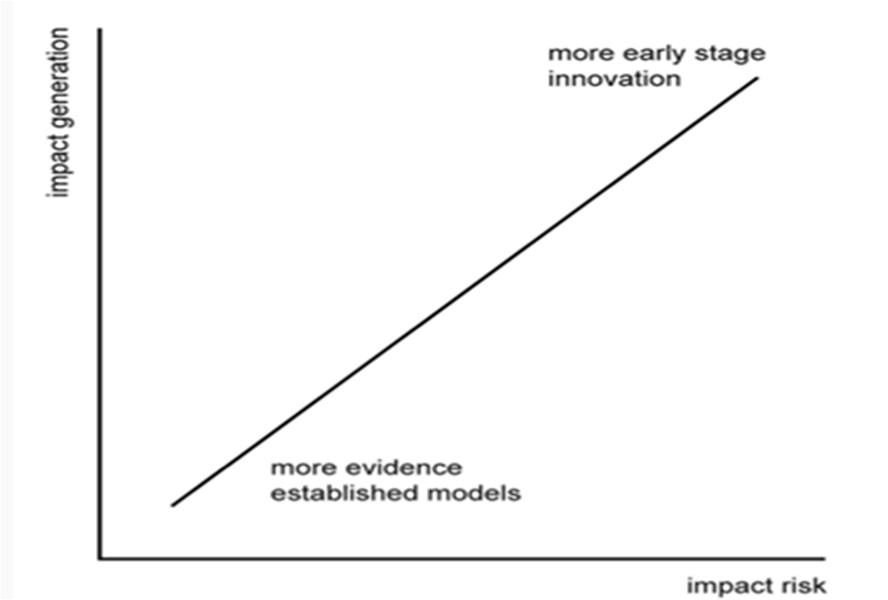
In The Good Investor, Hornsby and Blumberg (2013) argue that potential social return is greater for programmes that have yet to establish an evidence base.

“Investments that lie on the higher sections of the curve are likely to be increasingly characterised by less well tested, less evidenced approaches, but which are innovative, and present the potential for high levels of impact generation (e.g. through effecting a game-change in the prevailing dynamics). Investments that lie on the lower sections of the curve are more likely to be in established approaches and fields of operation, where investors know more what they are going to get, but the impact that stands to be generated is comparatively modest”.

Good Investor

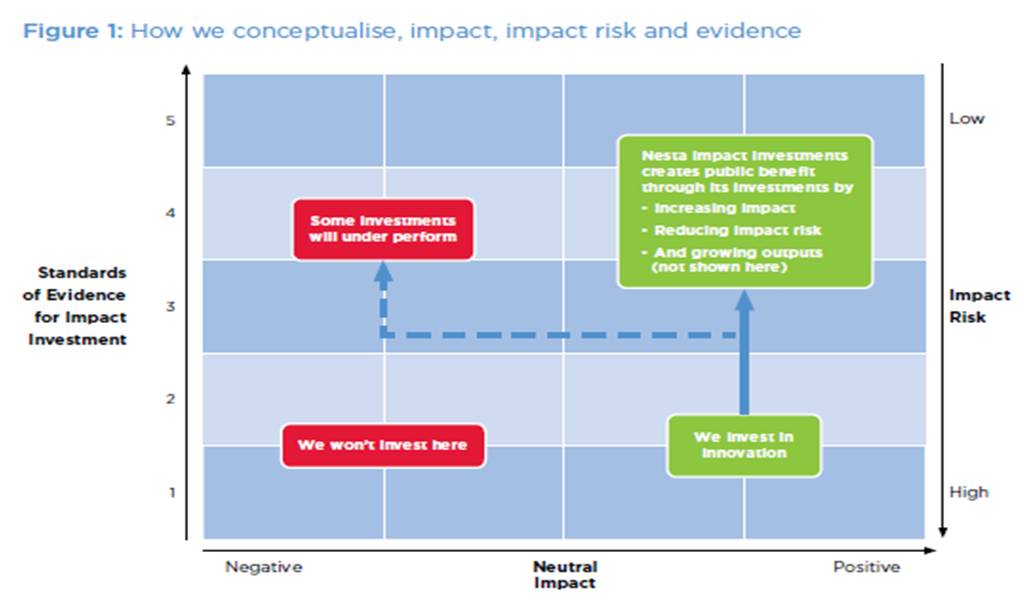
NESTA conceptualises the impact objectives of its funds in its report Standards of Evidence for Impact Investing using the diagram below. They aim to invest in early-stage innovations where both impact risk and potential impact is high, and then reduce impact risk as they scale effective programmes by increasing available evidence (Puttick and Ludlow, 2012, p.7).

Nesta

It should be noted that well-evidenced programs are not spread evenly across areas of social need, thus reliance on evidence – or programme outcomes that are easily or cheaply evidenced – could create a bias towards investment in certain social issues.

In their 2012 report, From potential to action: Bringing social impact bonds to the US, McKinsey gives three primary benefits of SIBs, one of which is:

“SIBs are a tool to scale proven social interventions. SIBs could fill a critical void: other than market-based approaches, a structured and replicable model for scaling proven solutions has not existed previously. SIBs can give structure to the critical handoff between philanthropy (the risk capital of social innovation) and government (the scale-up capital of social innovation) to bring evidence-based interventions to more people. SIBs can do this by aligning incentives among a broad set of stakeholders and shifting financial risk away from government” (p.7).

The McKinsey perspective may be reflective of a culture of evaluating and comparing social programmes in the US, such that it is possible to chose from a range of proven social interventions to bring to scale. The role of philanthropy as the ‘risk capital of social innovation’ may also apply more to the US than other jurisdictions. The cultural and political contexts of SIB development seem to be driving different assumptions concerning the impact of evidence-based versus innovation models. There may emerge an overwhelming conclusion as to which is the more attractive for a SIB model, but it may be more appropriate for each SIB to respond the objectives of its stakeholders.